
Water may seem harmless, but when it collects around your driveway, it can quickly turn into a serious problem. Poor water flow leads to cracks, erosion, and even foundation damage over time. That’s why proper driveway drainage is essential for maintaining both the appearance and durability of your property.
Whether you’re dealing with standing water, soil erosion, or structural issues, understanding the right drainage solutions can save you time, money, and stress. In this guide, we’ll explore everything you need to know about effective water management for your driveway.
Why Proper Drainage Matters
A well-designed system ensures that water flows away from your driveway instead of pooling on the surface. Without it, even light rain can cause long-term damage.
Here’s why it’s important:
- Prevents cracks and potholes
- Reduces soil erosion around the driveway
- Protects your home’s foundation
- Improves safety by reducing slippery surfaces
- Enhances curb appeal and property value
Ignoring drainage issues can lead to costly repairs that could have been avoided with the right setup.
Common Problems Caused by Poor Drainage
When water isn’t directed properly, it creates several noticeable issues:
1. Standing Water
Puddles that remain long after rainfall indicate improper slope or blocked drainage paths.
2. Surface Cracking
Water seeps into small cracks, expands during temperature changes, and weakens the material.
3. Soil Erosion
Flowing water washes away soil along the edges, destabilizing the structure.
4. Foundation Damage
Water near your home can seep into the foundation, leading to serious structural concerns.
5. Ice Formation
In colder conditions, trapped water freezes and creates hazardous surfaces.
Types of Driveway Drainage Solutions
Choosing the right solution depends on your landscape, soil type, and driveway material.
1. Channel Drains
Also known as trench drains, these are installed across the driveway to capture and redirect water efficiently.
Best for: Areas with heavy rainfall or sloped driveways.
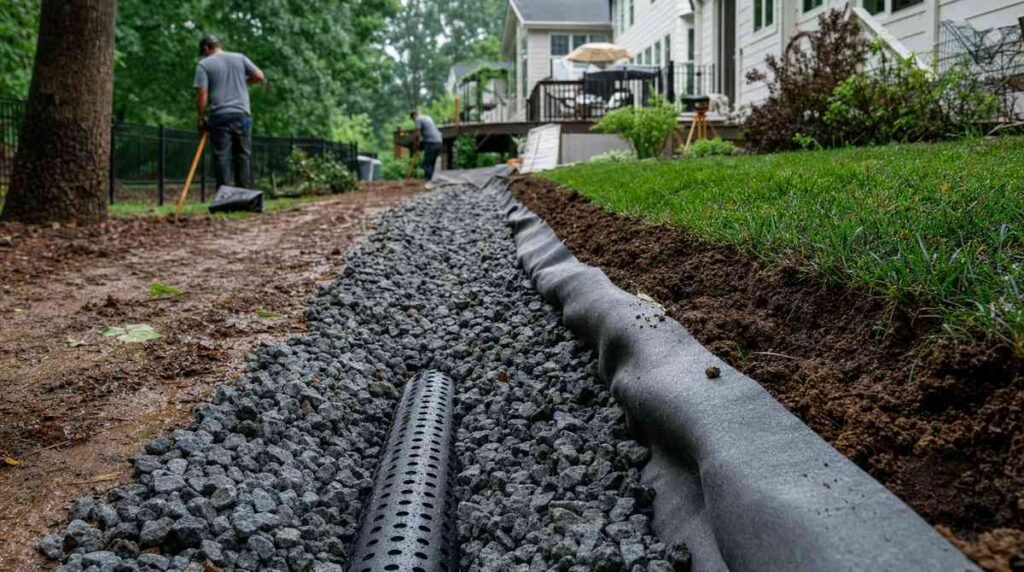
2. French Drains
These systems use perforated pipes surrounded by gravel to redirect water underground.
Best for: Properties with recurring water accumulation.
3. Sloped Driveways
A properly graded driveway naturally directs water away from the surface.
Best for: New installations or renovations.
4. Permeable Pavers
These allow water to pass through the surface and absorb into the ground below.
Best for: Eco-friendly drainage solutions.
5. Catch Basins
Installed at low points, they collect water and channel it through underground pipes.
Best for: Areas prone to pooling water.
Signs You Need a Drainage Upgrade
Not sure if your driveway needs attention? Look for these warning signs:
- Water pooling after rain
- Cracks forming on the surface
- Mud or erosion along edges
- Water flowing toward your home
- Frequent repairs needed
If you notice any of these, it’s time to consider a professional solution.
Benefits of Installing the Right System
Investing in proper water management offers long-term advantages:
Increased Durability
A well-drained driveway lasts significantly longer with minimal maintenance.
Cost Savings
Preventing damage is always cheaper than repairing it later.
Improved Safety
Eliminates slippery surfaces and reduces accident risks.
Better Aesthetics
Keeps your driveway clean, dry, and visually appealing.
How to Choose the Best Solution
Selecting the right approach requires evaluating several factors:
- Slope of your driveway
- Type of soil and drainage capacity
- Local weather conditions
- Driveway material (concrete, asphalt, pavers)
- Budget and maintenance preferences
Consulting professionals ensures you get a customized solution tailored to your property.
Maintenance Tips for Long-Lasting Results
Even the best systems require occasional upkeep to remain effective.
- Clean debris from drains regularly
- Check for blockages after heavy rain
- Inspect for cracks or damage
- Ensure proper slope is maintained
- Schedule periodic professional inspections
Routine maintenance helps prevent small issues from becoming major problems.
Eco-Friendly Drainage Options
Sustainable solutions are becoming increasingly popular among homeowners.
Rain Gardens
These landscaped areas absorb runoff and filter water naturally.
Gravel Borders
Help slow down water flow and improve absorption.
Permeable Surfaces
Reduce runoff and support groundwater recharge.
These options not only manage water effectively but also contribute to environmental conservation.
Professional Installation vs DIY
While some minor fixes can be handled independently, complex systems should always be installed by experts.
DIY Works For:
- Cleaning drains
- Minor grading adjustments
- Installing small gravel paths
Professional Help Needed For:
- Trench or channel systems
- Underground piping
- Large-scale grading
- Structural corrections
Hiring professionals ensures durability, efficiency, and compliance with local regulations.
Conclusion
A properly designed drainage system is essential for protecting your driveway and overall property. From preventing water damage to improving safety and longevity, the right solution makes a significant difference. Investing in effective water management today can save you from expensive repairs in the future.
For reliable and long-lasting solutions, ProSite and Septic offers expert services tailored to your property’s needs.
Frequently Asked Questions (FAQs)
1. What is the best drainage solution for a driveway?
The best solution depends on your property. Channel drains and French drains are among the most effective options for managing water flow.
2. How do I know if my driveway has poor drainage?
Signs include standing water, cracks, erosion, and water flowing toward your home.
3. Can I install driveway drainage myself?
Small fixes can be DIY, but complex systems require professional installation for proper results.
4. How much does driveway drainage installation cost?
Costs vary based on the solution, materials, and property size. A professional assessment provides accurate estimates.
5. How often should drainage systems be maintained?
Regular checks after heavy rain and seasonal inspections help ensure long-term performance.